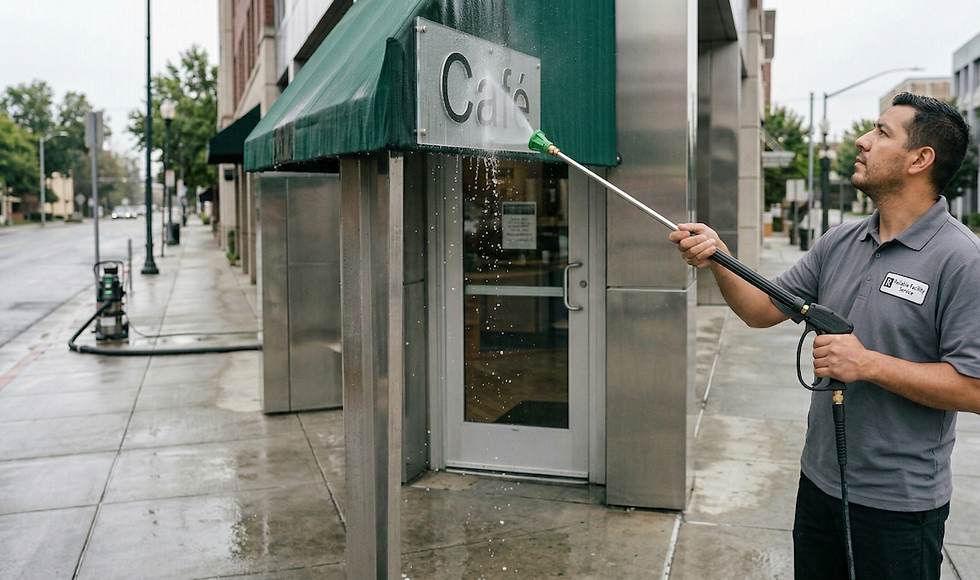
Can hot water power washing remove mold and mildew from commercial buildings?


Hot water power washing mold and mildew removal works well on many commercial exterior surfaces, but the method needs skill. Heat helps break down organic growth, grime, grease, pollen, dust, and soil load. Pressure removes residue from the surface. The cleaner, dwell time, rinse method, and surface type decide the final result.
For property managers, business owners, HOA managers, facility directors, restaurants, warehouses, dealerships, medical offices, and multi-tenant buildings, the better question is not only whether the growth comes off. You need to know why it formed, how to remove it safely, and how to slow its return.
Reliable Facility Service supports Murrieta, Temecula, Southwest Riverside County, North San Diego County, the Inland Empire, San Bernardino County, Orange County, and select Coachella Valley markets.
The Short Answer for Commercial Property Managers
Yes, hot water power washing removes mold and mildew from many hard commercial surfaces. It works especially well on concrete sidewalks, curbs, loading docks, dumpster pads, masonry, brick, parking garage concrete, and other durable exterior areas.
Hot water gives the cleaning process more force than cold water alone. Heat softens organic buildup and helps loosen sticky soil, grease film, food residue, pollen, and pollution film. This is important on commercial properties because mold and mildew often mix with dirt, oil, trash-area residue, irrigation minerals, and foot traffic grime.
Removal is not the same as long-term prevention. If the area stays shaded, wet, dirty, or poorly drained, growth returns. Common site causes include irrigation overspray, planter moisture, blocked drainage, dense planting, roof runoff, north-facing walls, and exterior surfaces with poor airflow.
Concrete often tolerates more pressure. Painted stucco, EIFS, soft stone, oxidized metal, old caulk, door seals, and signage need more control. The right crew chooses heat, cleaner, pressure, and rinse pattern based on the material.
For service details, review the company’s commercial cleaning services.
Why Mold and Mildew Grow on Southern California Commercial Buildings
Mold and mildew need moisture, organic material, and enough time on the surface. Southern California properties do not need heavy rain for these conditions to form. Many problem areas come from daily irrigation, shaded building sides, coastal moisture, dust, and surfaces with slow drying.
In Murrieta, Temecula, and Southwest Riverside County, irrigation overspray often hits stucco, storefront walkways, planter walls, curbs, and HOA common areas. In the Inland Empire and San Bernardino County, dust settles on exterior surfaces and mixes with pollen, debris, and moisture. In North San Diego County and Orange County, coastal moisture and marine air often keep shaded surfaces damp longer. In select Coachella Valley markets, desert dust and irrigation create a different soil load.
The worst growth often appears on north-facing elevations, breezeways, shaded sidewalks, trash enclosures, restaurant patios, loading areas, parking garage corners, and walkways near planters.
The CDC / NIOSH workplace mold guidance connects damp building conditions with occupant comfort and respiratory concerns, which makes moisture control a property maintenance issue, not a cosmetic issue alone.
Why Hot Water Works Better Than Cold Water in Many Commercial Jobs
Hot water improves cleaning because temperature changes how soil releases from the surface. Cold water often moves loose dirt. Hot water helps soften greasy residue, organic buildup, gum residue, food film, pollen, and compacted grime. This matters on commercial sites with high traffic, food service, trash areas, and vehicle activity.
Commercial hot-water washing systems often operate in a high-heat range near 180°F to 200°F, depending on equipment and job requirements. The heat helps the cleaner work, helps break the bond between residue and surface, and helps the rinse carry away loosened material.
The Kärcher hot water pressure washer guide notes faster cleaning performance with hot water and discusses high-temperature cleaning effects. For commercial building care, the key point is practical. Heat supports removal, but it does not replace inspection, detergent choice, dwell time, or surface-safe pressure.
A master cleaner does not solve every problem by turning up pressure. Too much force scars concrete, etches softer surfaces, pushes water behind wall systems, damages seals, and leaves wand marks.
Does Hot Water Kill Mold or Remove It?
Exterior hot water power washing is best understood as surface removal. The goal is to remove visible mold, mildew, algae, dirt, and organic residue from the commercial surface. Heat improves the cleaning process, but no responsible exterior cleaning company should promise permanent mold elimination from every surface.
The EPA mold remediation guide explains the central role of moisture control. If the water source remains, mold growth returns. This point matters for commercial exteriors because repeated growth usually points to ongoing shade, irrigation, poor drainage, roof runoff, or slow drying.
Dead mold residue is still residue. It should be removed from the surface instead of being left behind. This is why rinsing, recovery, and final inspection matter.
There is also a line between exterior mildew cleaning and larger mold remediation. Exterior growth on concrete, masonry, sidewalks, or trash areas is often a cleaning issue. Interior mold, wall cavity moisture, wet drywall, HVAC contamination, roof leaks, or widespread water intrusion belongs in a different category. OSHA’s workplace mold guidance points to planning, moisture correction, and worker protection for larger mold concerns.
Surface-by-Surface Guide for Commercial Buildings
Durable surfaces usually respond best to hot water power washing. Concrete sidewalks, curbs, loading docks, dumpster pads, parking garage floors, service bays, brick, masonry, and many exterior hardscape areas often handle a stronger cleaning process. These surfaces collect soil load from foot traffic, vehicle residue, trash handling, restaurant service, irrigation runoff, pollen, and windblown dust.
Concrete near restaurants or trash areas often needs heat because mildew is mixed with grease and food residue. HOA walkways often show growth near planters, shaded corners, and irrigation heads.
More delicate surfaces need a different plan. Painted stucco, EIFS, older masonry, soft stone, decorative coatings, window seals, door thresholds, oxidized metal, wood trim, signage, and caulk joints should not receive the same pressure used on concrete. Some areas need soft washing, controlled detergent use, lower pressure, wider spray patterns, or hand-detailing near edges.
Stone surfaces deserve special care. Natural stone and some decorative concrete finishes react poorly to aggressive pressure or harsh chemistry. Hard-water residue and mineral staining also need correct identification because mildew cleaning will not remove every mineral deposit.
California Runoff Rules Matter During Mold and Mildew Cleaning
Commercial power washing creates wastewater. On a building exterior, this water often carries dirt, detergent, biological residue, oils, grease, food debris, gum residue, pollen, and other contaminants. On a commercial property, the crew must think about where the water goes before work begins.
This is a major difference between a trained commercial cleaning team and a low-bid spray crew. A property manager needs cleaner surfaces, but also safe access, protected drains, protected tenant entries, and a jobsite with fewer surprises.
San Diego County’s power washing stormwater guidance states power washing runoff should not enter streets or storm drains. This matters across Southern California because many local agencies follow the same clean-water principles.
Professional runoff planning includes drain awareness, berms when needed, wet vacuum recovery in select areas, controlled rinse direction, careful detergent use, and work timing with lower pedestrian traffic. Restaurants, dealerships, medical offices, retail centers, and HOAs all need water control because entrances, parking lots, sidewalks, and tenant spaces often sit close together.
What to Expect During a Reliable Facility Service Visit
A professional visit starts with inspection. The crew should identify the surface, the source of the staining, and the risk areas before washing. Dark buildup is not always mold. It might be algae, dirt, grease, irrigation residue, hard-water staining, efflorescence, soot, or mineral deposits.
This matters because each problem needs a different response. Mildew on shaded stucco does not require the same approach as grease and mildew on a restaurant pad. Dust and organic buildup on a Coachella Valley walkway does not behave the same as coastal mildew on a North San Diego County property. A stained stone entry needs a different plan than a concrete loading dock.
A proper service visit also considers tenants and business operations. The crew should plan around entrances, signage, glass, landscaping, pedestrians, vehicles, and hours of operation. Some jobs work best before opening, after closing, or during lower traffic periods.
Reliable service also includes communication. You should know what will clean up well, what might need repeat treatment, what might be permanent staining, and what site conditions might cause regrowth.
For coverage details, view the Reliable Facility Service service areas.
When to Schedule Hot Water Power Washing
Schedule service when mold, mildew, algae, or dark organic buildup begins affecting appearance, safety, or tenant experience. Early cleaning is easier than waiting until buildup bonds with grease, minerals, dust, and traffic residue.
Common warning signs include slippery sidewalks, mildew around irrigation overspray, dirty dumpster pads, restaurant grease mixed with organic growth, stained loading docks, tenant complaints, HOA board concerns, and dirty storefront approaches.
Cleaning frequency depends on site conditions. A dry, open commercial wall might need occasional service. A shaded HOA walkway with daily irrigation might need recurring cleaning. A restaurant pad or trash enclosure might need monthly or quarterly maintenance. A coastal retail center might need seasonal exterior cleaning because shaded surfaces dry slowly. A warehouse or dealership in a dusty area might need scheduled washing because dust and moisture keep feeding the surface.
Pairing hot water power washing with commercial floor care, window washing, janitorial support, and specialty cleaning gives property managers a more complete maintenance plan. For quick service answers, review the Reliable Facility Service FAQ page.
Conclusion: Schedule Your Site Review With Reliable Facility Service

Hot water power washing removes mold and mildew from many commercial building surfaces when the work follows the right process, with clear planning before water hits the surface. Heat helps break down organic buildup, grease, dust, pollen, and grime. Pressure removes loosened residue. Detergent, dwell time, surface knowledge, and runoff control decide how clean the surface gets and how safely the job is completed.
The best results come from a property-specific plan. Concrete, stucco, masonry, stone, painted surfaces, trash enclosures, loading docks, parking garages, and tenant walkways all need different handling. Moisture sources matter too. A clean surface still needs dry conditions. If shade, irrigation, drainage, or coastal moisture keep the area damp, growth returns.
If your commercial building, HOA property, restaurant, warehouse, dealership, medical office, retail center, or multi-tenant facility needs exterior cleaning, schedule a site review through the Reliable Facility Service contact page.
Frequently Asked Questions
Will hot water power washing remove mold and mildew from commercial buildings?
Yes. Hot water power washing removes mold and mildew from many hard commercial surfaces. The result depends on surface type and process control.
Is hot water better than cold water for mildew removal?
Often, yes. Hot water helps loosen organic buildup, grease film, dirt, pollen, and residue faster than cold water alone.
Will power washing damage stucco, paint, or exterior walls?
It will damage surfaces when the wrong method is used. Painted stucco, EIFS, soft stone, old masonry, seals, signs, and decorative finishes need lower pressure, careful chemistry, wider spray patterns, or soft washing.
Why does mildew return after power washing?
Mildew returns when moisture and organic soil remain part of the site conditions. Shade, irrigation overspray, poor drainage, dense landscaping, coastal moisture, and slow drying all feed regrowth.
How often should commercial properties schedule mold and mildew cleaning?
Frequency depends on shade, traffic, irrigation, food service, dust, coastal moisture, and soil load. Some sites need seasonal service, while restaurants, trash enclosures, HOA walkways, and high-use commercial areas often need recurring maintenance.