How do commercial janitorial companies price their monthly contracts?

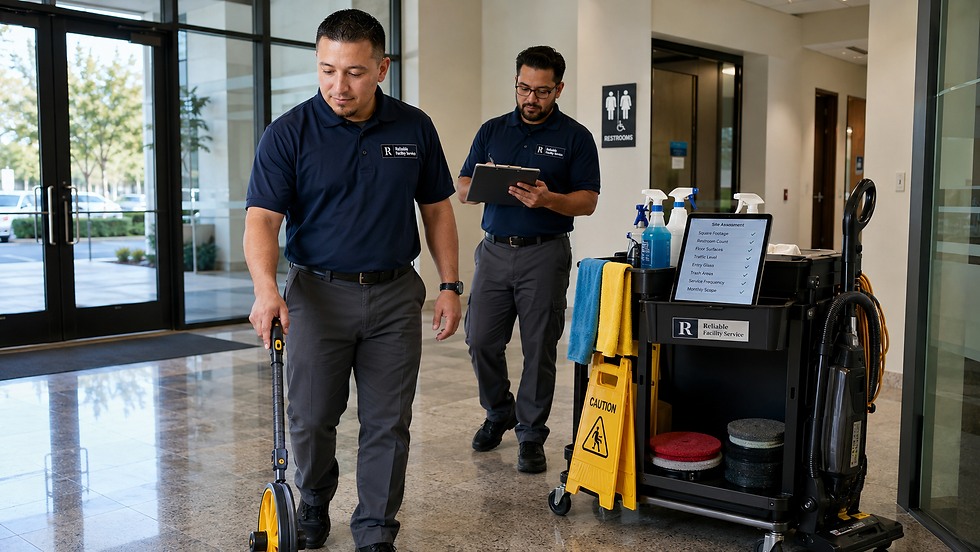
Commercial janitorial contract pricing is built from labor time, cleaning frequency, cleanable square footage, facility type, supplies, supervision, insurance, and scope. A low monthly price means little unless you know what work is included.
For properties in Murrieta, Temecula, Southwest Riverside County, North San Diego County, the Inland Empire, Orange County, and select Coachella Valley markets, pricing also reflects labor costs, access, dust, heat, moisture, grease, restroom load, and exterior needs.
Monthly Janitorial Pricing Starts With Labor Time
The Basic Contract Formula
Most monthly janitorial proposals start with labor. Square footage matters, but labor hours drive the price. A professional estimator reviews the building, counts restrooms, checks flooring, studies traffic patterns, reviews access, and estimates how long each visit should take.
Pricing factor | What it means |
Labor hours per visit | Time needed to clean the building correctly |
Visits per month | How often the crew returns |
Labor burden | Wages, taxes, insurance, and workers’ compensation |
Supplies | Chemicals, liners, paper goods, soap, and equipment wear |
Quality control | Site checks, training, and communication |
A simple comparison formula helps:
Monthly contract price divided by cleanable square footage equals monthly cost per square foot.
This number helps compare bids, but it is not the whole bid. A 20,000-square-foot office with light traffic prices differently from a 20,000-square-foot medical office with exam rooms, restrooms, and high-touch surfaces.
Why Square Footage Alone Gives a Weak Answer
Square footage does not show soil load, restroom fixture count, floor type, glass, trash volume, or the time needed to move through the site.
The missed factor is production rate. This means how much space a trained cleaner finishes per hour under real site conditions. Open warehouse space often cleans faster per square foot than a dense medical office, restaurant, or retail center. Small restrooms, tight hallways, breakrooms, and detailed touchpoints slow production.
The Main Drivers Behind a Monthly Cleaning Price
Cleaning Frequency and Scope
Cleaning frequency is one of the biggest price drivers. A building cleaned five nights per week costs more than a building cleaned twice per week. More visits mean more labor, supplies, travel, scheduling, and supervision.
Frequency also affects quality. If restrooms, breakrooms, lobbies, and trash areas go too long between visits, odors build, floors collect grit, and tenants complain.
Scope matters as much as frequency. A proposal should spell out what the crew handles each visit, weekly, monthly, and seasonally. Trash removal, restroom sanitation, vacuuming, floor care, breakroom cleaning, dusting, glass touch-ups, and supply restocking all need clear terms.
Restrooms, Floors, Trash, and High-Touch Surfaces
Restrooms change pricing fast. Fixture count often tells more than square footage. A property with eight restrooms, public access, high use, and odor complaints needs more labor than a larger office with two private restrooms.
Floors also shape the price. Carpet needs vacuuming, spot treatment, and periodic extraction. Hard floors need dust control, damp mopping, edge detail, and the right cleaner for the surface. Tile and grout collect soil in grout lines. Polished stone, concrete, and specialty floors need product control because the wrong chemical dulls or damages the surface.
Trash volume matters, too. Restaurants, retail centers, medical offices, and multi-tenant properties often create more waste than a standard office. Clients get fewer complaints.
Facility Type Changes Monthly Pricing
Offices, Medical Offices, Restaurants, Warehouses, Dealerships, HOAs, and Retail Centers
Different facilities need different pricing logic. A generic office-cleaning price does not work for every property type.
Facility type | Main pricing pressure | Common extra needs |
Office | Staff count, restrooms, breakrooms | Carpet spotting, entry glass |
Medical office | Exam rooms, high-touch surfaces | Detailed room process |
Restaurant | Grease, food soil, odors | High-heat washing, floor degreasing |
Warehouse | Dust, docks, large floors | Sweeping, restroom routes |
Retail center | Public traffic, glass, spills | Window washing, exterior cleaning |
Dealership | Showroom floors, glass | Floor polishing, service-area soil |
HOA common area | Shared restrooms, walkways | Power washing, clubhouse cleaning |
A medical office often costs more per square foot than a warehouse because more detailed cleaning happens in less space. CDC healthcare environmental cleaning guidance focuses on risk, patient vulnerability, surface exposure, and cleaning process.
Exterior Areas Change the Price
Many Southern California properties need more than interior janitorial. Retail centers, HOAs, restaurants, dealerships, and multi-tenant sites often need exterior walkway cleaning, trash enclosure washing, entry glass, window washing, gum removal, and periodic hot water cleaning.
Reliable Facility Service offers commercial cleaning through Reliable Facility Service and facility care through our services. This matters because one provider reviewing the full property often finds problems missed by a basic nightly cleaning bid.
High-heat power washing near 200°F helps remove grease, gum, spills, and buildup on exterior hard surfaces. Window washing supports storefront appearance. Floor and carpet cleaning extend interior surface life. Stone restoration protects higher-end lobby and restroom materials.
What Is Included and What Is Usually Separate
Standard Recurring Janitorial Tasks
A monthly janitorial contract often includes trash removal, restroom cleaning, breakroom cleaning, dusting, vacuuming, hard floor cleaning, entry glass touch-ups, spot cleaning, and high-touch surface work.
The proposal should say how often each task happens. Daily trash removal is different from weekly dusting. Restroom cleaning once per visit is different from multiple checks per day. Vacuuming traffic lanes is different from full edge detail.
Supplies need clear wording. Some contracts include liners, paper towels, toilet tissue, soap, sanitizer, and restroom consumables. Others price labor only, with supplies billed separately.
Commercial clients should also ask about supervision. A stable janitorial program needs trained crews, site notes, schedule control, equipment checks, and quality inspections. The U.S. Bureau of Labor Statistics tracks janitors and building cleaners as a labor-driven occupation, which matches what property managers see in real bids.
Specialty Services Priced Outside the Base Contract
Many services sit outside a base janitorial price unless the proposal includes them. These include high-heat power washing, full window washing, carpet extraction, floor stripping and waxing, tile and grout deep cleaning, stone restoration, post-construction cleaning, emergency cleaning, and trash enclosure washing.
This does not mean they belong outside the service plan. It means they need their own schedule, method, and price. A quarterly carpet extraction plan, monthly power washing route, or annual floor care program often protects the building better than waiting for decline.
A low monthly bid sometimes excludes every specialty item. Then the property manager pays extra when the building needs deeper work. A complete proposal shows what is included, optional, and seasonal.
Why Southern California Pricing Differs From National Averages
Labor, Insurance, Travel, and Compliance
National online price ranges often fail in Southern California. A contract in Murrieta, Temecula, Orange County, North San Diego County, the Inland Empire, San Bernardino County, or the Coachella Valley must reflect labor costs, payroll burden, workers’ compensation, liability insurance, fuel, vehicle time, supplies, and crew supervision.
California labor rules matter. The California Department of Industrial Relations lists state minimum wage rules and updates, which affects every labor-heavy service company. Higher wage floors push cleaning providers to price work with discipline. A bid ignoring true labor cost often cuts hours, rushes work, or loses staff.
Service areas matter too. A route serving Southwest Riverside County has different travel patterns than one serving coastal Orange County, North San Diego County, or desert properties in the Coachella Valley. A multi-site account also needs route planning and backup staffing.
Dust, Moisture, Heat, Grease, and Hard Water
Inland Empire warehouses deal with dust, forklift residue, dock soil, and large concrete floors. Southwest Riverside County retail centers deal with foot traffic, pollen, spills, gum, and restroom use. North San Diego County and Orange County properties deal with coastal moisture, glass residue, and exterior buildup. Coachella Valley sites deal with desert dust, heat, and dry soil tracking.
Restaurants add grease. Medical offices add high-touch surfaces. Dealerships add showroom glass, tire dust, and service-area soil. HOAs add shared restrooms, clubhouse traffic, pool areas, and trash enclosures.
Hard-water residue also affects glass, exterior tile, fixtures, and entry areas. If sprinklers hit windows or walkways, the building needs more detailed maintenance. Wrong products create streaking, haze, etching risk, or dull floors.
Reliable Facility Service covers these markets through its service areas, which helps clients align pricing with site conditions instead of national averages.
How to Compare Janitorial Quotes Without Getting Burned
Compare Scope Before Price
A low number is not always a better price. First compare the scope. Are the visits equal? Are restroom counts equal? Are supplies included? Are floor care tasks listed? Are exterior areas included? Are windows included? Are inspections included? Are specialty services listed as optional or missing?
A strong proposal names the cleaning frequency, task list, included areas, excluded services, supplies, scheduling, access requirements, insurance, and communication process. Weak proposals lead to disputes.
Ask each provider how many labor hours the proposal allows per visit. If one bid is far lower, the difference often sits in labor time. Less labor means rushed restrooms, skipped detail, poor floor care, and missed trash.
Use the Walkthrough as the Pricing Test
A walkthrough is the best way to price a commercial property. The estimator sees flooring, restrooms, trash areas, breakrooms, entry glass, exterior walkways, access points, parking, alarm procedures, water sources, and tenant patterns.
The walkthrough also shows how the client wants the building to feel. A medical office needs a cleaner patient experience. A retail center needs curb appeal, clean glass, clean walkways, and restroom confidence. An HOA needs common areas without odor, residue, or weekend complaints.
EPA Safer Choice information helps explain why product selection matters for some clients. Safer product choices, disinfectant needs, surface compatibility, and odor concerns all affect the service plan.
For common service questions, review the Reliable Facility Service FAQ. To schedule a walkthrough and pricing review, use the contact page.
Conclusion: Price the Building, Not a Guess

Monthly janitorial pricing should be clear. The price comes from labor time, cleaning frequency, cleanable square footage, restroom count, surface type, soil load, supply needs, supervision, insurance, and specialty services.
A square-foot number helps compare bids, but not the work. The better question is whether the bid includes enough labor and the right scope to keep the building clean every month.
For commercial properties across Murrieta, Temecula, Southwest Riverside County, North San Diego County, the Inland Empire, San Bernardino County, Orange County, and select Coachella Valley markets, local conditions matter. Dust, heat, moisture, grease, hard water, public traffic, tenant density, and exterior buildup all affect price.
Reliable Facility Service prices commercial janitorial contracts by looking at the real property. If you want a clear monthly proposal for your office, HOA, retail center, medical office, restaurant, warehouse, dealership, or multi-tenant facility, request a walkthrough from Reliable Facility Service.
Frequently Asked Questions
How much does monthly commercial janitorial service cost?
Monthly price depends on cleanable square footage, labor hours, visits per week, restrooms, flooring, supplies, and service scope. A walkthrough gives the most accurate price because it shows the real cleaning load.
Is commercial cleaning priced by the hour or by square foot?
Both methods appear in proposals. Most stable monthly contracts start with labor hours and scope, then use square-foot cost as a comparison number.
Why do janitorial quotes vary so much?
Quotes vary because providers estimate labor time, supplies, supervision, insurance, access, and specialty work differently. A lower quote often excludes work or gives the crew fewer hours per visit.
Are restroom supplies included in a monthly cleaning contract?
Sometimes. Paper goods, liners, soap, sanitizer, and restroom consumables need to be listed in the proposal as included, separate, or client-provided.
Does medical office cleaning cost more than regular office cleaning?
Often, yes. Medical offices usually need more detailed high-touch cleaning, room-by-room process control, and tighter product selection.


