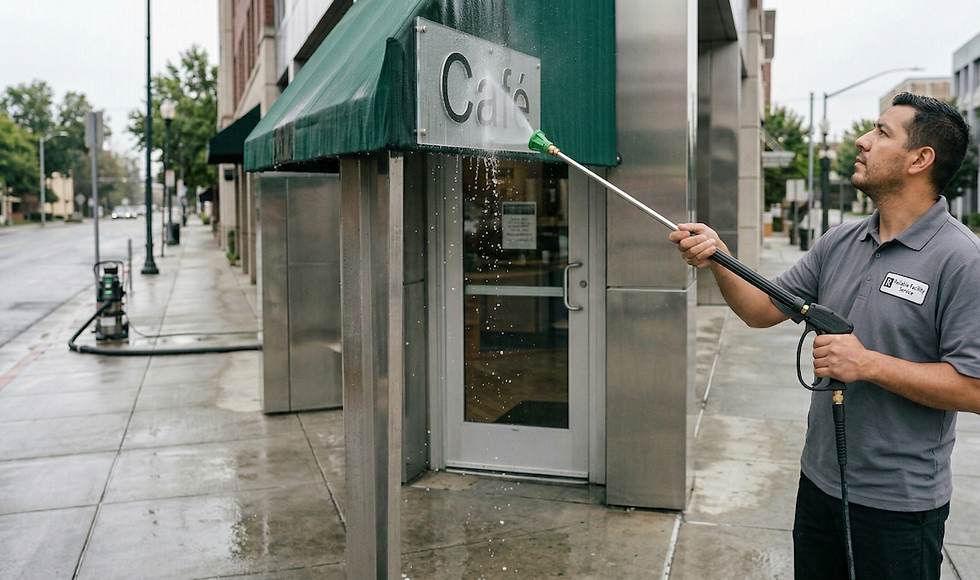
How does regular exterior power washing increase commercial property value?


Commercial power washing property value depends on more than curb appeal. Clean exterior surfaces protect tenant confidence, customer trust, walking safety, surface life, and maintenance budgets.
A clean property tells tenants, customers, employees, and buyers one clear thing: ownership pays attention. A dirty property sends the opposite message before anyone steps inside. Regular exterior power washing helps prevent grime from becoming a larger asset problem.
Reliable Facility Service supports Southern California properties with exterior cleaning programs built around commercial use, surface type, soil load, water temperature, runoff control, and ongoing maintenance needs.
Why Exterior Appearance Affects Commercial Property Value
Commercial value starts with trust. A tenant touring an office building, a customer walking into a retail center, or a buyer reviewing a multi-tenant property reads the exterior fast. Stained concrete, dark entry mats, dirty storefront frames, algae near shaded walkways, and grease near service zones all point to neglect.
In Southern California, exterior surfaces collect traffic film from Highways like The PCH, the 101 and the 405. Southern California properties also deal with spring pollen, irrigation mineral stains, gum near retail doors, food residue near restaurants, and shaded organic growth in courtyards and north-facing walkways.
A clean exterior protects perceived value because it shows active management. It helps tenants feel proud of the address. It helps customers feel safer and more welcome. It helps owners reduce the look of deferred maintenance.
Clean Exteriors Support Tenant and Customer Confidence
Tenants judge more than rent and square footage. They look at the parking lot, sidewalks, storefronts, restrooms, exterior lighting, and service areas.
Regular exterior washing removes the buildup people notice first. Gum clusters, oily footprints, bird droppings, algae, and food residue make a property feel poorly run. Cleaner entries and walkways support stronger tenant confidence because the property feels managed, not ignored.
Dirty Surfaces Make Deferred Maintenance More Visible
Deferred maintenance lowers confidence. Regular washing keeps visible surfaces from looking older than they are and helps managers spot cracks, drainage issues, failing sealers, and coating damage earlier.
A clean property exterior also helps support leasing, renewals, and buyer confidence. No single wash creates value by itself. A consistent maintenance record helps protect the asset over time.
How Regular Power Washing Protects Exterior Surfaces
Power washing supports property value by protecting the materials people walk on, drive over, touch, and see every day. Concrete, pavers, stucco, brick, painted metal, exterior tile, coated flooring, loading docks, and dumpster pads each respond differently to pressure, heat, chemistry, and technique.
A weak cleaning process relies on pressure alone. A professional process starts with soil type and surface type. Grease, gum, algae, mineral scale, rust, soot, tire marks, paint transfer, and food residue do not respond the same way. Concrete tolerates more pressure than stucco or older masonry. Painted surfaces need caution. Stone and brick need test areas. Sealed surfaces need a method matched to the coating.
Hot water breaks down grease and oil. Proper detergents loosen soils before rinsing. Controlled pressure reduces etching risk. Regular planned cleaning beats rare aggressive cleaning.
Storefronts, Walkways, Parking Areas, and Dumpster Pads Face Different Risks
Storefronts collect fingerprints, dust, gum, spilled drinks, and planter runoff. Sidewalks collect foot traffic grime, algae, and irrigation stains. Parking areas collect oil, tire marks, sediment, and trash residue. Dumpster pads collect grease, food waste, odor, and pest attractants.
Reliable’s commercial cleaning services help property managers plan around high-visibility areas.
More Pressure Is Not Better Cleaning
High pressure in the wrong place damages surfaces. It scars soft concrete, forces water into gaps, strips paint, damages mortar, and leaves wand marks. The U.S. General Services Administration notes low jet pressure for historic masonry cleaning should not exceed 300 PSI, with test patches used to set pressure and wand distance: GSA masonry cleaning guidance.
A skilled cleaner uses the least aggressive method needed for the soil and surface. Heat, chemistry, dwell time, and rinse volume often do more work than raw pressure. This protects the building while still producing a cleaner surface.
Why Safety Risk Is Part of Commercial Property Value
Safety affects value because risk affects operations, tenant satisfaction, and owner confidence. Dirty walking surfaces are not a cosmetic problem only. Algae, grease, oil, gum, food residue, wet leaves, and organic growth create slick or uneven areas around entrances, ramps, parking walkways, service corridors, and dumpster pads.
The Occupational Safety and Health Administration requires walking-working surfaces to be kept clean, orderly, sanitary, and in good repair: OSHA walking-working surfaces standard. The U.S. Bureau of Labor Statistics reported 479,480 days-away-from-work cases involving falls, slips, and trips in 2024: BLS injury data.
For commercial property managers, clean exterior areas support better control. They show tenants and visitors a safer route from parking to entry. They reduce visible hazards before complaints start. They also support documentation when owners need to show ongoing maintenance practices.
Dirty Walkways Create a Bad First Impression and a Safety Concern
A visitor does not need a facilities background to notice a slick walkway. Green algae on shaded concrete, dark grease marks near a rear door, oily parking stalls, gum near retail doors, and wet grime near outdoor dining areas all send a bad signal.
This matters in Southern California properties with heavy traffic. Retail centers in North San Diego, medical offices in Anaheim, office parks in Rancho Cucamonga, and mixed-use properties in Oceanside need exterior surfaces kept in better condition because many people use them daily.
Cleaner Exterior Areas Support Better Property Management
Property managers get judged by visible details. Tenants complain about stains, odor, and dirty access points long before they complain about hidden systems. Routine washing helps managers stay ahead of those complaints and supports a broader plan. For common service questions, review the commercial cleaning FAQ.
Why Southern California Properties Need Stormwater-Safe Power Washing
Southern California commercial power washing needs more than clean results. It needs runoff awareness. Exterior cleaning water moves across sidewalks, parking lots, drive lanes, dumpster pads, and loading areas. If the job involves detergents, degreasers, oil, grease, sediment, paint residue, or heavy debris, runoff planning matters.
The EPA explains stormwater runoff from impervious surfaces picks up pollutants such as trash, chemicals, oils, and dirt: EPA stormwater program. The Cities of Southern California also directs businesses to report illegal dumping into storm drains, manholes, and creeks. California Water Boards guidance recommends dry cleanup before wet cleaning, drain inlet protection, and proper routing for wash water when needed.
This is a local trust signal. A commercial property near Lake Elsinore, Huntington Beach, San Bernardino's Deep Creek, or the Mission Bay needs exterior cleaning with environmental care built into the process. Proper site prep protects the owner, tenants, and surrounding community.
Runoff Planning Matters Near the Bay
Parking lots, sidewalks, and dumpster pads collect more than dirt. They collect brake dust, oil residue, spilled beverages, food waste, gum, sediment, leaves, and debris. A crew without a runoff plan risks moving those materials toward storm drains.
A professional plan starts before the machine turns on. Crews inspect drainage paths, remove dry debris, protect drains where needed, select proper chemistry, and decide whether recovery or sanitary sewer routing is needed.
A Professional Crew Checks the Whole Site Before Washing
Reliable Facility Service works across Southern California service areas, where site conditions differ by property type. A restaurant pad in Downtown Anaheim does not need the same process as an office walkway in Carlesbad or a parking structure in Ontario.
A proper site check reviews soil type, surface condition, drainage, tenant hours, foot traffic, nearby doors, landscaping, slope, water access, and safety cones. It also checks whether hot water, detergent, degreaser, gum removal, or post-treatment fits the job.
What Areas Should Be Power Washed to Protect Commercial Property Value
Regular exterior cleaning works best when tied to a schedule. A property with daily food traffic, heavy pedestrian use, or large parking areas needs more frequent service than a low-traffic office site. The goal is not to wash everything on the same calendar. The goal is to clean each area before buildup hurts perception, safety, or surface condition.
For Southern California properties, a smart schedule also accounts for season. Spring pollen settles on glass, frames, and entries. Summer dust and traffic film build on hardscape. Fall debris blocks drains and stains concrete. Winter rain spreads soil, algae, and sediment across walkways.
A planned schedule helps property managers defend the budget. It turns exterior washing from an emergency expense into preventive maintenance. It also helps tenants see consistent care instead of one cleanup after months of buildup.
Recommended Exterior Power Washing Schedule
Exterior Area | Value Risk If Neglected | Power Washing Benefit | Suggested Frequency |
Storefronts | Poor first impression | Cleaner customer-facing entry | Monthly to quarterly |
Sidewalks | Gum, grime, slip risk | Safer, cleaner walkways | Every 1 to 3 months |
Parking lots | Oil stains and tire marks | Better appearance and cleaner pavement | Every 3 to 6 months |
Building exterior | Mold, soot, algae, traffic film | Better curb appeal and surface protection | Every 6 to 12 months |
Dumpster pads | Grease, odor, pest attraction | Cleaner sanitation zone | Monthly to quarterly |
Loading areas | Grease, dirt, debris | Cleaner operations area | Quarterly or as needed |
Outdoor dining areas | Food residue and foot traffic | Better customer experience | Monthly or more often |
High-Traffic Southern California Properties Need More Frequent Cleaning
Restaurants, grocery centers, medical buildings, HOA common areas, and industrial properties need tighter cleaning cycles. Food service areas need grease control. Retail walkways need gum removal. Industrial properties need oil, sediment, and dock-area cleaning.
Recurring cleaning also helps keep stains from bonding deeper into concrete. Oil, rust, gum, and irrigation minerals become harder to remove after long exposure. Regular maintenance reduces the need for harsh restoration cleaning later.
Why High-Heat Power Washing Gives Commercial Properties a Stronger Clean
High-heat power washing gives commercial properties a stronger clean because heat changes how soils release from surfaces. Cold water removes loose dirt, dust, and some light surface grime. Heated water performs better on grease, oil, gum, food-service residue, dumpster pad buildup, and heavy commercial soils.
This matters for Southern California restaurants, retail centers, auto-related properties, grocery centers, and service corridors. Heat softens and loosens them, while proper detergent helps lift them from the surface.
The best commercial process uses temperature, chemistry, dwell time, water flow, and controlled pressure together. The goal is a cleaner surface with less surface abuse.
Heat Breaks Down Grease, Oil, Gum, and Food-Service Grime
Grease and oil resist cold-water rinsing. Hot water helps break their bond with concrete and other hard surfaces.
Dumpster pads, loading zones, outdoor dining paths, and rear service entries often need hot water because soils are heavier. These areas affect odor, sanitation, tenant complaints, and pest attraction. Cleaning them regularly protects both appearance and operations.
The Right Cleaning Method Protects the Property From Damage
A skilled technician reviews the site before choosing the method. Soil type comes first. Surface type comes next. Then the crew selects water temperature, chemistry, dwell time, flow, pressure, and drain protection.
This decision process matters because poor cleaning creates damage. Excess pressure leaves lines. Wrong chemicals stain surfaces. Poor rinse control moves grime into drains or landscaping. A measured process protects surfaces while improving the appearance people notice first.
Conclusion

Regular exterior power washing increases commercial property value by protecting what people see, walk on, drive over, and judge first. It improves curb appeal, supports tenant and customer confidence, reduces visible neglect, helps manage walking-surface risk, protects exterior materials, and supports cleaner site operations.
For Southern California properties, the right process matters. You need more than pressure. You need hot water when soils demand it, surface-specific cleaning, runoff planning, drain awareness, proper chemistry, and a maintenance schedule built around real property use.
If your commercial property has stained walkways, dirty storefronts, algae, gum, oil, grease, traffic film, or dumpster pad odor, schedule a site review with Reliable Facility Service. Use the contact page to request a commercial exterior cleaning estimate.
Frequently Asked Questions
Does regular power washing increase commercial property value?
Yes. Regular power washing supports commercial property value by improving curb appeal, reducing visible neglect, protecting exterior surfaces, and supporting tenant and customer confidence. It works best as part of a preventive maintenance plan.
How often should a commercial property be power washed?
Most commercial building exteriors need service every 6 to 12 months. Sidewalks, storefronts, dumpster pads, restaurant areas, and high-traffic walkways often need service monthly, quarterly, or every 3 to 6 months.
Which commercial areas need power washing most often?
Entries, sidewalks, storefronts, outdoor dining areas, parking spaces, dumpster pads, loading zones, and shaded walkways need the most attention. These areas collect the most visible soil and create the fastest negative impression.
Does power washing damage concrete, stucco, brick, or stone?
Poor technique damages surfaces. A professional cleaner matches pressure, flow, heat, nozzle angle, chemistry, and dwell time to the surface and soil type before washing.
Is commercial power washing safe for storm drains in Southern California?
It is safe when the crew plans for runoff. Professional service includes dry cleanup, drain protection, detergent control, grease awareness, and wash-water handling when site conditions require it.
What is the difference between pressure washing and high-heat power washing?
Pressure washing relies on water force. High-heat power washing uses heated water to break down grease, oil, gum, and heavy commercial buildup more effectively.