Why is a multi-phased approach best for post-construction commercial cleaning?

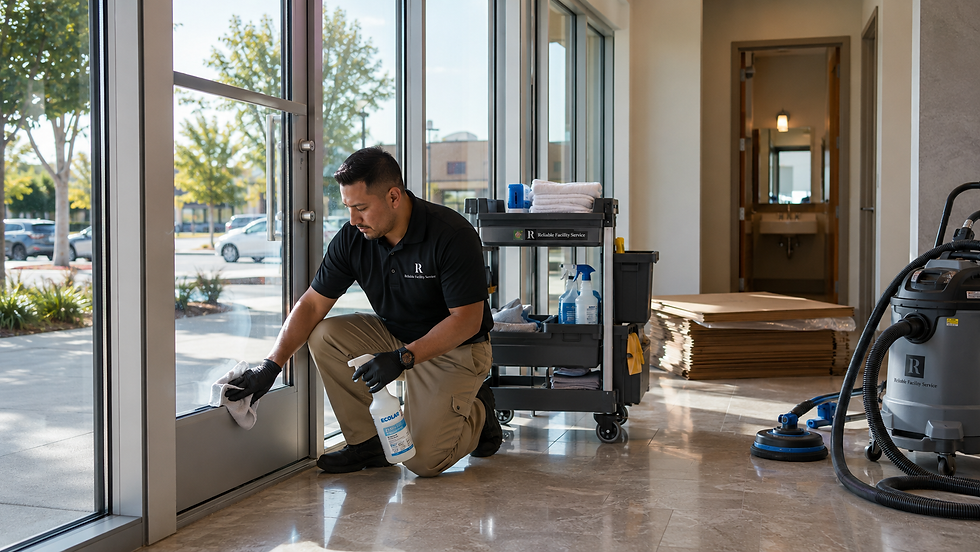
Post-construction commercial cleaning works best in phases because a building does not get dirty once. Debris, dust, adhesive residue, glass haze, floor soil, grease film, pollen, and punch-list mess appear at different times. One final clean often gets buried by late trades, furniture delivery, fixture work, or exterior dirt tracked back inside. A phased plan gives each pass a clear purpose. Rough cleaning clears heavy soil. Detail cleaning resets finished surfaces. Final touch-up prepares the property for inspection, opening, tenant move-in, or recurring janitorial care from Reliable Facility Service.
Why One Final Clean Fails on Commercial Construction Projects
A one-pass final clean sounds efficient, but it rarely fits a real commercial jobsite. Construction dirt keeps moving. Drywall dust settles on ledges after the first wipe. Concrete dust gets pulled across floors by carts and shoes. Painters leave touch-up marks. Glass installers leave fingerprints and sticker residue. Flooring crews leave edge dust and adhesive film. Restroom fixture work leaves grit around partitions, sinks, and drains.
This is worse on larger properties. Warehouses in the Inland Empire, retail spaces in Orange County, medical offices in North San Diego County, and multi-tenant buildings in Southwest Riverside County often involve several trades working in the same space. A final cleaning crew entering too early ends up cleaning around active work. Money gets spent before the space is ready.
The smarter move is to match cleaning frequency to soil load and project stage. Heavy debris needs one approach. Fine dust needs another. Finished glass, stone, carpet, tile, and resilient flooring need a lighter, more controlled process. Rushed cleaning also increases surface risk. New finishes look strong, but many are easy to scratch, dull, stain, or smear when cleaned with the wrong tool or chemical.
What the Rough Cleaning Phase Should Handle First
The rough cleaning phase removes the heaviest layer of jobsite soil. This is not presentation cleaning. It is site reset work. The goal is to remove bulk debris, loose packaging, scrap material, heavy dust, tracked soil, and obstructions from access paths, restrooms, entries, service corridors, and major floor areas.
This phase matters because housekeeping affects access and safety. OSHA’s construction housekeeping standard requires debris, scrap lumber, and protruding nails to be cleared from work areas, passageways, and stairs. Cal/OSHA also addresses housekeeping in construction areas, which gives this topic direct relevance for Southern California commercial sites. Use these as authority support through OSHA housekeeping guidance and Cal/OSHA Title 8 Section 1513.
Rough cleaning is also where local site conditions matter. In Murrieta, Temecula, Menifee, Lake Elsinore, San Bernardino County, and select Coachella Valley projects, exterior dirt, stucco dust, windblown grit, and parking lot soil often feed back into the building. A rough clean should account for entries, walk paths, loading areas, dumpster zones, and exterior hardscape. Reliable Facility Service lists its local coverage on its Southern California service areas page.
What the Detail Cleaning Phase Should Remove
Detail cleaning begins after major construction activity slows and most installed surfaces are in place. This is where the project starts to look like a finished commercial property instead of a controlled jobsite. Detail work covers glass, frames, tracks, counters, fixtures, ledges, baseboards, doors, cabinets, restrooms, break rooms, flooring edges, and high-touch surfaces.
The cleaner has to read the surface before choosing the method. Construction dust on luxury vinyl tile is not the same as drywall dust on carpet. Hard-water residue on glass is not the same as sticker adhesive. Grease film near a restaurant buildout is not the same as concrete dust on a warehouse floor. Coastal moisture in North San Diego County and Orange County also changes residue behavior on glass and metal. Desert dust in Coachella Valley markets changes the cleaning load around entries and storefronts.
Good detail cleaning protects finishes. Glass should not be scraped blindly. Stone should not be hit with acidic products. Stainless fixtures need the grain respected. Carpet needs dry soil extraction before moisture enters the process. Commercial floors often need dust removal, auto-scrubbing, neutral cleaning, edge work, and controlled drying. RFS connects these needs through its wider commercial cleaning services, including janitorial, window washing, floor and carpet cleaning, stone restoration, power washing, and specialty cleaning.
Why the Final Touch-Up Phase Matters Before Handoff
The final touch-up phase is the last presentation pass before the walkthrough, tenant handoff, opening day, or recurring janitorial start. This phase should happen after punch-list traffic slows, furniture delivery is complete, signage work is done, and major trade movement has ended. If touch-up happens too soon, the site gets dirty again before the owner or tenant sees it.
Final touch-up focuses on what people notice first. Entry glass, lobby floors, restroom fixtures, counters, door handles, baseboards, corners, elevator areas, break rooms, and customer-facing surfaces need close attention. Footprints, fingerprints, smudges, dust resettling, tape residue, and cart marks often appear after the detail clean. This phase catches those issues before the property feels unfinished.
For Orange County retail spaces, medical offices, dealerships, and restaurant buildouts, this final visual standard matters. For Inland Empire warehouses and logistics spaces, it helps separate construction dust from the first day of operations. For HOA facilities and multi-tenant properties, it improves common area presentation. A clean handoff also gives the janitorial team a better starting point. If construction dust remains in tracks, corners, carpet, vents, or floor edges, recurring janitorial starts behind instead of maintaining a proper baseline.
How Phased Cleaning Protects Dust Control, Floors, Glass, and Exterior Areas
Fine construction dust is not normal office dust. Concrete, masonry, tile, stone, and saw-cut work produce fine particles with different risk levels. OSHA’s silica page explains exposure concerns tied to respirable crystalline silica in construction work. Use this reference with care, because not every site has the same exposure profile, but it supports the point: fine dust needs controlled removal through the right equipment and sequence. See OSHA silica guidance.
Phased cleaning also protects floors. New resilient flooring, polished concrete, carpet, tile, grout, and natural stone all react differently to soil and moisture. Heavy grit left too long acts like sandpaper. Wet cleaning before dry dust removal creates slurry in corners and grout lines. Strong chemicals on the wrong stone or metal finish leave damage instead of a clean surface.
Exterior cleaning belongs in the sequence too. In Riverside County, San Bernardino County, and Coachella Valley markets, dust, pollen, heat-baked residue, tire marks, grease buildup, and hard-water staining around entries often affect the interior result. High-heat power washing, often in the 180 to 200 degree range when appropriate for the surface and soil, helps remove grease film, gum residue, oily buildup, and tracked grime from concrete, dumpster pads, service areas, and walkways. For more on this service line, review RFS high-heat power washing.
What a Phase-by-Phase Cleaning Scope Should Include
A strong commercial post-construction scope should name the phase, timing, purpose, tasks, and risk of skipping it. Vague scopes create confusion. A property manager needs to know what happens before inspection, what happens before tenant handoff, and what happens after dust settles.
Phase | Timing | Main Purpose | Common Tasks | Risk If Skipped |
Rough clean | After major work | Remove heavy debris and dust | Bulk debris, access paths, dry soil removal, broad floor areas | Dust spreads and trades work around mess |
Detail clean | After most trades finish | Clean installed surfaces | Glass, fixtures, restrooms, floors, ledges, frames | Residue remains and finishes look incomplete |
Final touch-up | Before handoff | Prepare presentation areas | Smudges, fingerprints, traffic marks, final dust | Walkthrough feels rushed and unfinished |
The EPA reports large national volumes of construction and demolition debris, which reinforces why cleanup planning matters on commercial work. EPA also provides information on construction and demolition materials through its C&D materials management resource. In Riverside County, local C&D diversion rules add another reason to manage debris with planning instead of chaos.
Before booking cleaning, ask practical questions. Are painters finished? Is flooring installed? Is glass complete? Are restroom fixtures working? Is furniture delivery done? Are exterior entries dirty? Will recurring janitorial start right after handoff? The answers shape crew size, cleaning frequency, equipment, and timing.
Conclusion: Plan the Cleaning Sequence Before the Final Walkthrough with Reliable Facility Service

Post-construction commercial cleaning works best when each phase has a job. Rough cleaning clears heavy soil and improves access. Detail cleaning removes residue from finished surfaces. Final touch-up prepares the space for inspection, opening, and tenant use. This sequence protects schedules, reduces rework, limits dust migration, protects finishes, and gives property managers a cleaner handoff.
For commercial properties in Murrieta, Temecula, Southwest Riverside County, North San Diego County, the Inland Empire, San Bernardino County, Orange County, and select Coachella Valley markets, local soil conditions matter. Desert dust, coastal moisture, hard-water residue, grease buildup, pollen, exterior tracking, and high-traffic construction schedules all affect the plan.
Reliable Facility Service helps commercial property managers, contractors, HOA managers, facility directors, restaurants, medical offices, warehouses, dealerships, retail centers, and multi-tenant property operators plan the right cleaning sequence. Review the company cleaning service FAQs, then contact Reliable Facility Service to plan post-construction commercial cleaning from rough cleanup to final handoff.
Frequently Asked Questions
What are the phases of post-construction commercial cleaning?
The main phases are rough cleaning, detail cleaning, and final touch-up. Each phase handles a different soil load and a different point in the construction schedule.
Why is phased post-construction cleaning better than one final clean?
Phased cleaning prevents waste. It keeps heavy debris, fine dust, finish residue, and final presentation issues from being handled in one rushed visit.
What is included in rough construction cleaning?
Rough cleaning usually includes bulk debris coordination, broad dust removal, access path cleanup, restroom construction residue, and major floor area reset work. It prepares the site for safer movement and later detail cleaning.
How do you remove construction dust from a commercial building?
Start high, work low, remove dry dust before wet cleaning, and use proper filtration where fine dust is present. Microfiber tools, HEPA vacuuming where appropriate, and controlled floor cleaning reduce resettling.
When should final touch-up cleaning happen?
Final touch-up should happen close to the walkthrough or occupancy date. It works best after punch-list work, furniture delivery, signage, and heavy trade traffic have slowed.
Does exterior cleaning matter during post-construction cleanup?
Yes. Dirty walkways, entries, loading zones, and hardscape track soil back inside. Exterior cleaning before final interior touch-up helps protect glass, floors, lobbies, and common areas.


