Why is hospital-grade sanitation important for corporate offices?


Office disinfection services protect shared workplaces when the program matches the real risk. A corporate office does not need every surface soaked with disinfectant each day. It needs routine cleaning, targeted disinfection, trained technicians, and clear quality controls.
Reliable Facility Service supports commercial properties across Southern California with janitorial cleaning, floor and carpet care, window washing, high-heat power washing, stone restoration, and specialty cleaning. The goal is not stronger chemical use. The goal is correct service for each surface, soil level, occupancy pattern, and exposure concern.
Hospital-grade sanitation adds value in shared restrooms, breakrooms, conference rooms, reception areas, and other high-touch spaces. It also supports outbreak response after visible illness. In low-risk areas, sound routine cleaning often provides the right level of care.
What Hospital-Grade Sanitation Means in a Corporate Office
Hospital-grade sanitation refers to a controlled cleaning and disinfection process built around an EPA-registered hospital disinfectant. The product label identifies approved surfaces, target organisms, dilution directions, safety steps, and required contact time. The label also sets legal directions for use.
The term does not mean sterile or promise an illness-free workplace. Surface hygiene works alongside handwashing, ventilation, air filtration, and sensible sick-work policies.
The EPA antimicrobial performance program requires hospital disinfectants to meet defined performance standards. Registration alone is not enough. Technicians still need to remove visible soil, apply enough product, meet the label time, and prevent cross-contamination.
Cleaning, Sanitizing, and Disinfecting Serve Different Jobs
Process | Main Purpose | Typical Office Use | Example |
Cleaning | Removes soil and many germs | Routine daily care | Desks and counters |
Sanitizing | Reduces germs to a defined level | Selected shared areas | Breakroom counters |
Disinfecting | Kills listed organisms | High-touch or illness-related areas | Restroom fixtures |
Hospital-grade disinfection | Uses an EPA-registered hospital disinfectant | Elevated-risk situations | Outbreak-response touchpoints |
Cleaning comes first when dirt, grease, body oils, or food residue are present. Soil blocks direct chemical contact with the surface.
A Stronger Chemical Is Not Always a Better Choice
Unsuitable disinfectants risk haze, residue, discoloration, corrosion, or coating damage. A professional program matches the chemistry to each surface and risk.
When Targeted Disinfection Belongs in an Office Plan
Targeted hospital-grade disinfection belongs in areas with frequent hand contact, dense traffic, shared equipment, or a recent illness event. It also fits offices serving older adults, medical patients, or other people with elevated health risks.
Shared restrooms, breakrooms, elevator controls, reception desks, and conference spaces often need more attention than private offices.
The CDC cleaning and disinfection guidance supports routine cleaning for many settings, with added disinfection in higher-risk conditions. This risk-based model directs labor toward real exposure points.
High-Touch Areas Need a Written Risk Map
A useful office risk map includes:
Lobby door pulls
Elevator buttons
Badge readers and keypads
Shared phones
Copier controls and touchscreens
Conference-room controls
Coffee stations and water dispensers
Breakroom appliance handles
Restroom fixtures
Stair rails
Reception counters
Shared workstations
Training rooms
Mail and delivery areas
Frequency should follow traffic, occupancy, and soil load. A busy public restroom needs a different schedule from a private office or storage room.
Routine Cleaning Is Enough for Many Low-Risk Surfaces
Walls, low-contact floors, private offices, and lightly used storage spaces often need routine soil removal rather than repeated disinfection. The same rule applies to dust, pollen, fingerprints, or tracked-in grit. Overuse of disinfectant adds residue, surface wear, and wasted labor.
Why Process Controls Determine the Result
Hospital-grade products fail when the application process is weak. Common failures include spraying over visible dirt, wiping too soon, mixing at the wrong ratio, using one cloth across several zones, or applying a product to an unapproved surface.
A sound process starts with inspection of the surface, soil type, traffic level, and recent use. Visible soil is removed before label-directed application.
Professional commercial cleaning services should support repeatable work rather than vague promises. Written procedures, labeled containers, Safety Data Sheets, zone controls, and supervisor inspections set a reliable standard.
Contact Time Is a Performance Requirement
Contact time is the period during which the surface stays visibly wet. If the label calls for five minutes, the full surface needs wet coverage for five minutes. Early wiping reduces exposure time and weakens the intended result.
Warm indoor air, direct sun, and strong HVAC airflow speed evaporation. The technician needs full wet coverage and label-approved reapplication if drying occurs. Longer contact times fit after-hours work better than occupied reception areas.
Cross-Contamination Undermines Good Chemical Work
A disinfected desk gains little value when a restroom cloth touches it next. Color-coded microfiber, separate mop systems, glove changes, and clean-to-dirty work patterns reduce transfer between zones.
Technicians should move from lower-soil areas toward higher-soil areas. Restroom and breakroom tools need strict separation, with used cloths replaced between zones.
The OSHA cleaning chemical guidance also stresses training, protective equipment, ventilation, proper labeling, and access to Safety Data Sheets. Employee safety remains part of sanitation quality.
Southern California Office Conditions Change the Cleaning Plan
Southern California offices face wide differences in climate and outdoor soil. Murrieta and Temecula properties often deal with dust, pollen, construction residue, and vehicle traffic. Inland Empire and San Bernardino County sites add warehouse soil and loading-dock grease.
North San Diego County and Orange County properties face coastal moisture and busy public entries. Coachella Valley offices face desert dust and PM10 infiltration.
These are not all disinfection problems. Dust needs HEPA vacuuming and microfiber work. Grease needs suitable degreasers and agitation. Hard-water residue needs mineral-focused treatment.
Exterior Soil Control Supports Interior Sanitation
Clean entrances reduce the amount of grit, gum, grease, pollen, and residue tracked indoors. High-heat exterior washing often uses water near 180°F, with pressure, flow, temperature, and detergent adjusted for the surface. Concrete, coated areas, stone, and joint materials require different settings.
High heat supports grease and gum removal at loading zones, walkways, dumpster areas, and restaurant service spaces. It does not replace indoor disinfection.
Facility managers reviewing Southern California service areas should match interior and exterior schedules to local traffic, weather, and property use.
Floor and Carpet Care Need Separate Methods
Hard floors collect grit, oils, spills, and chemical residue. VCT might need scrub and recoat service. Polished concrete needs neutral cleaning and finish-safe pads. Natural stone needs pH-aware products. Carpet needs planned vacuuming, spot treatment, interim cleaning, and hot-water extraction based on soil load.
Repeated disinfectant use on floors often adds residue. Floor care should protect traction, appearance, finish life, and indoor cleanliness.
How to Evaluate Your Janitorial Provider
Facility managers need more than a product name. Ask the contractor to explain the full process in direct terms. A qualified provider should identify the EPA registration number, approved surfaces, target organisms, dilution ratio, contact time, PPE requirements, and cross-contamination controls.
Ask how staff protect electronics, stone, metal, finished wood, and upholstery. Ask how supervisors verify completion and what changes after illness or during an outbreak.
Review the provider's commercial cleaning FAQ, then compare the written answers with field practice. Good documentation should match what technicians do inside the building.
Watch for These Red Flags
Warning signs include:
One chemical used on every surface
Immediate spray-and-wipe work
Unlabeled secondary bottles
No product label available
No clear dilution process
Restroom cloths used in breakrooms
Haze or residue after service
No supervisor inspection
No outbreak-response plan
Promises of a germ-free office
A contractor should never hide behind broad terms such as hospital-grade or medical-grade. You need product details, process details, and clear limits.
A Professional Walkthrough Should Produce a Site Plan
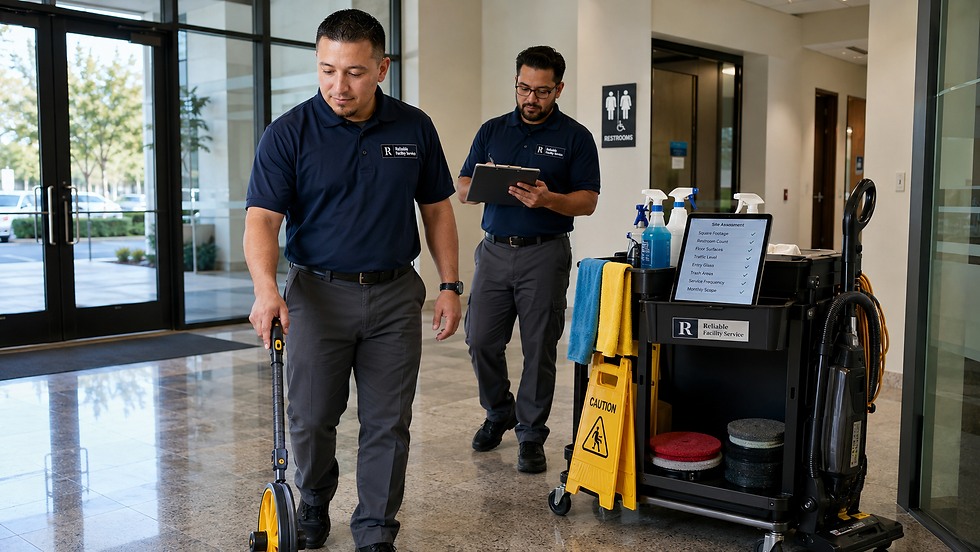
The walkthrough should document traffic, touchpoints, restrooms, breakrooms, floor types, sensitive finishes, service windows, exterior soil sources, and entry conditions.
From there, the provider should propose routine, seasonal, and event-based service levels. The plan should state what receives cleaning, sanitizing, disinfection, floor care, carpet care, or exterior washing. This level of clarity protects your budget and your property.
Build a Sanitation Program Around Your Office
A strong sanitation program reflects how people use the building. It combines daily or scheduled janitorial work with targeted disinfection, floor care, carpet cleaning, glass care, restroom service, and exterior maintenance.
Routine service removes ordinary soil and maintains presentation. Seasonal service adds attention during periods of elevated respiratory illness, heavy pollen, wildfire ash, holiday traffic, or increased visitor volume. Event-based service responds to visible illness, spills, smoke infiltration, construction dust, or an outbreak.
Quality control should include inspection notes, correction procedures, staff training, and a direct contact for facility concerns. After-hours scheduling limits disruption and gives technicians enough time for proper contact periods. Monthly reviews help adjust frequencies when occupancy, traffic, weather, or tenant use changes.
Reliable Facility Service should explain which areas need added sanitation and which areas need standard cleaning. You receive a clearer scope, fewer surprises, and service tied to real conditions.
Conclusion: Reliable Facility Service serves corporate and commercial properties across Select Southern California Counties

Hospital-grade sanitation matters when it is used with purpose. The product needs the right EPA registration, surface approval, dilution, contact time, and application process. The technician also needs proper training, zone controls, protective equipment, and quality oversight.
Your office does not need blanket chemical treatment. It needs a plan based on occupancy, high-touch activity, soil load, surface type, local conditions, and recent illness events. Routine cleaning handles ordinary soil. Targeted disinfection addresses selected exposure points. Floor, carpet, glass, and exterior care protect the rest of the property.
Reliable Facility Service serves corporate and commercial properties across Murrieta, Temecula, Southwest Riverside County, North San Diego County, the Inland Empire, San Bernardino County, Orange County, and select Coachella Valley markets. A documented scope gives your team a clear standard for future reviews and service changes.
Request a facility assessment to identify where targeted hospital-grade disinfection adds value and where routine professional cleaning is the better choice.
Frequently Asked Questions
What Does Hospital-Grade Disinfectant Mean?
Hospital-grade disinfectant refers to an EPA-registered product meeting defined antimicrobial performance standards. The label lists approved surfaces, organisms, dilution directions, safety requirements, and contact time.
Does Every Corporate Office Need Hospital-Grade Disinfection?
No. Many low-risk office surfaces need routine cleaning. Targeted disinfection fits shared restrooms, high-touch areas, heavy public traffic, visible illness events, and outbreak response.
How Often Should High-Touch Office Surfaces Be Disinfected?
Frequency depends on traffic, occupancy, surface use, building type, and current illness activity. A public restroom or shared copier often needs more frequent attention than a private office.
Does Hospital-Grade Cleaning Prevent Employee Illness?
It reduces surface contamination when the correct product and process are used. Workplace health also depends on hand hygiene, ventilation, air filtration, sick-work policies, and employee behavior.
How Do I Verify Proper Disinfection Work?
Ask for the product label, EPA registration number, contact time, dilution directions, training process, and cross-contamination controls. Also request quality-control records and a clear explanation of surface compatibility.