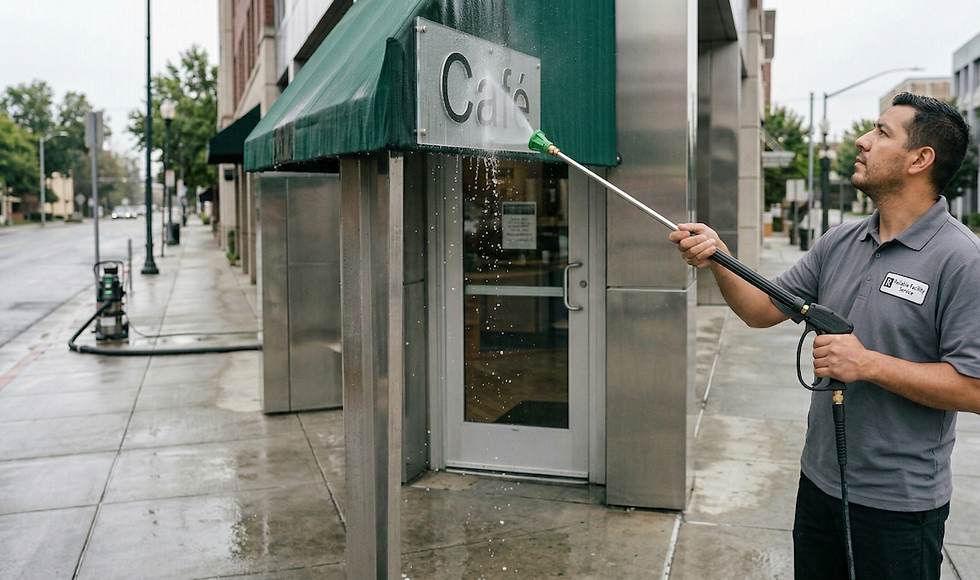
Can high-pressure power washing remove old grease stains from concrete?


Can high-pressure power washing remove old grease stains from concrete? Yes, in many cases, but pressure alone is not the answer. Old grease needs heat, the right degreaser, dwell time, agitation, controlled pressure, and proper rinse-water handling. For San Jose commercial properties, the process also needs storm drain protection because grease, detergent, and dirty wash water create risk beyond a bad-looking slab.
Reliable Facility Service serves San Jose and the Greater South San Francisco Bay Area with commercial janitorial, hi-heat power washing, window washing, floor and carpet cleaning, and specialty cleaning. This guide gives you a clear answer before you waste money on weak cleaning or damage your concrete.
Why Old Grease Stains Are Harder To Remove Than Fresh Grease
Fresh grease usually sits near the top of the concrete. Old grease has had time to soak into pores, collect dirt, oxidize, and bond with the surface. Concrete looks solid, but it behaves like a hard sponge. Open pores, hairline cracks, broom-finished texture, and unsealed slabs all give grease places to hide.
A restaurant dumpster pad in Downtown San Jose has a different problem than a residential driveway in Willow Glen. Food grease, fryer oil, trash liquids, tire marks, and organic residue often mix together. A parking stall near an auto shop has a petroleum-based stain with different chemistry. A loading dock might have hydraulic fluid, cooking oil, rubber transfer, and tracked-in soil in one stain.
Surface Grease And Embedded Grease Need Different Treatment
Surface grease responds faster. Embedded grease needs a stronger process. If the stain has moved below the top layer, cleaning the visible surface might leave a faint shadow. A shadow does not always mean poor workmanship. It often means oil migrated deeper than a surface cleaner reaches.
Why Pressure Alone Is Not Enough For Old Grease
Many property owners focus on PSI. This is the wrong starting point. High pressure removes loose material, but grease resists water. Grease needs to be broken down before water flow removes it. Without heat and degreaser, a pressure washer often spreads the stain, creates streaks, or pushes oily residue across nearby concrete.
Too much pressure also damages concrete. A narrow nozzle held too close creates wand marks. Weak concrete, old slabs, and poorly cured patches scar fast. Concrete still curing in the first month after placement needs extra care because aggressive washing might weaken the surface paste. For older commercial concrete, the main concern becomes etching, exposed aggregate, joint damage, and uneven appearance.
The Better Cleaning Formula
The stronger process is simple but precise. Inspect the concrete. Protect drains. Apply a commercial degreaser. Let it dwell. Agitate heavy buildup. Use hot water. Clean with a surface cleaner for even coverage. Control dirty water. Review the result after the slab dries.
Why Hot Water Power Washing Works Better On Grease
Cold water is weak against grease. It rinses loose dirt, but it does not break heavy oil and food grease well. Hot water softens grease and helps the degreaser emulsify it. Once the grease bond weakens, pressure and water volume remove the loosened material.
Dwell Time Is Not Optional
Degreaser needs contact time. Spraying it on and rinsing right away wastes product and leaves residue behind. A technician chooses dwell time based on stain severity, weather, surface temperature, and concrete texture. Hot days dry cleaners too fast, so the process needs control.
Flow Rate Carries The Grease Away
PSI loosens material. Gallons per minute move it away. Low flow leaves dirty water and loosened oil sitting on the slab. A commercial setup pairs heat, pressure, and water volume so the stain does not spread.
When Old Grease Stains Come Out Completely
Some old grease stains clean up well. The best results occur when grease remains close to the surface, the concrete has not absorbed oil for years, the slab is not sealed over the stain, and the cleaning process uses proper heat and chemistry. A test area often tells the truth fast.
A commercial cleaner should never promise a perfect result before inspecting the slab. Grease removal depends on the stain source, age, concrete finish, previous cleaning attempts, and drainage conditions. Broom-finished concrete traps residue in grooves. Smooth troweled concrete cleans differently. Exposed aggregate presents another surface profile.
When A Stain Only Lightens
Deep grease often leaves ghosting. The concrete looks cleaner, safer, and better maintained, but a light outline remains. In those cases, repeated treatment, longer dwell time, or a poultice-style stain process might improve the result.
San Jose Commercial Properties Face A Bigger Grease Problem
Grease-stained concrete creates more than an appearance issue. It creates slip risk, odor, pest attraction, tenant complaints, customer concerns, and a poor first impression. In San Jose and the South Bay, those issues show up around restaurants, retail centers, HOAs, office parks, medical buildings, auto-related businesses, and industrial sites.
Grease buildup near a dumpster pad is one of the clearest warning signs. If the slab smells bad, attracts pests, or tracks residue into nearby walkways, the property needs more than a quick rinse. Scheduled cleaning helps prevent grease from moving deeper into the concrete.
Local Areas Where Grease Builds Up
Reliable Facility Service handles cleaning needs across San Jose and South Bay communities. Commercial sites in Willow Glen, Downtown San Jose, Santana Row, Silver Creek, Los Gatos, Saratoga, Campbell, Santa Clara, Sunnyvale, Cupertino, Milpitas, and Morgan Hill all face heavy concrete use. Review the company’s San Jose and South Bay service areas to confirm coverage.
Why Scheduled Cleaning Beats Emergency Cleaning
Emergency cleaning costs more because the stain has had more time to cure into the slab. Routine cleaning removes grease before it becomes a deep stain. For restaurants, retail plazas, and property managers, scheduled cleaning also keeps service areas safer and more presentable.
Stormwater Rules Matter When Cleaning Grease In San Jose
Outdoor power washing in San Jose requires care because storm drains lead to local creeks and the Bay. The City of San José says it inspects restaurants, transportation facilities, auto repair shops, construction sites, and service businesses for stormwater protection. The city also says it must ensure compliance with laws regulating runoff into storm drains, streams, rivers, and San Francisco Bay. Use the City of San José business environmental guidance and City stormwater guidance for local reference.
Dirty wash water from grease cleaning is not plain water. The EPA warns washing activities create discharges with sediment, detergents, oils, grease, and heavy metals. This is why commercial cleaning must include drain protection, water control, and proper disposal planning. The EPA washing BMP guidance supports this approach.
Bay Area Surface Cleaning Needs Water Control
BASMAA notes surface cleaning around sidewalks, plazas, parking areas, drive-throughs, and food-service dumpster areas needs proper wash-water handling. BASMAA surface cleaning guidance gives useful Bay Area direction.
What Proper Runoff Control Looks Like
A trained crew protects nearby drains, checks slope, controls rinse water, uses the right cleaner, and avoids sending polluted water into the wrong place. This matters most near restaurant pads, parking lots, sidewalks, and sloped service areas.
DIY Pressure Washing Often Makes Old Grease Worse
Rental pressure washers look simple. Old grease removal is not simple. A DIY attempt often leaves tiger stripes, etched concrete, dirty runoff, smeared oil, or partial cleaning rings. Once the surface has marks from poor technique, fixing the appearance becomes harder.
The most common mistake is rinsing too soon. Degreaser needs time to work. The next mistake is using a narrow tip too close to the slab. This creates permanent wand marks. Another mistake is using cold water on food grease or oily residue. Cold water often moves the mess around without breaking it down.
When You Should Call A Professional
Call a professional if the stain covers a large area, sits near a storm drain, smells bad, attracts pests, affects customer-facing concrete, or comes from restaurant grease. Also call if previous attempts failed. At Reliable, the broader commercial cleaning and power washing services are built for sites where exterior cleaning connects with janitorial care, floor care, and specialty cleaning.
What A Professional Should Explain Up Front
A professional should explain expected results, stain limits, water control, cleaning sequence, and site needs before work starts. You should know whether the goal is full stain removal, major improvement, odor reduction, safer footing, or scheduled maintenance.
How Reliable Facility Service Handles Grease-Stained Concrete
Reliable Facility Service approaches grease-stained concrete as a full cleaning problem. The crew looks at the stain source, concrete condition, drainage, nearby doors, foot traffic, and business hours. This matters because a restaurant walkway needs a different plan than an industrial loading dock.
The process starts with inspection. The crew identifies whether the stain looks like food grease, vehicle oil, trash liquid, or mixed residue. Then the site is prepared. Drains, landscaping, doors, and sensitive areas need protection. Degreaser is applied, given dwell time, and agitated where needed. Hi-heat power washing follows, often with a surface cleaner for an even finish.
Why A Facilities Partner Helps
Grease usually comes back when the source stays active. Dumpster pads, restaurant back doors, drive-through lanes, and loading areas need recurring care. A facilities partner helps set the right cleaning frequency instead of waiting for the slab to become a problem again.
Questions Before Booking
If you want to understand timing, service scope, or preparation, the company’s common cleaning service questions page is a helpful starting point. For active grease stains, photos also help the team understand stain size, location, and access before scheduling.
Conclusion

High-pressure power washing removes many old grease stains from concrete, but the best result comes from the right system. Heat matters. Degreaser matters. Dwell time matters. Water volume matters. Drain protection matters. Pressure alone is not the answer.
For San Jose restaurants, retail centers, office parks, HOAs, service businesses, and property managers, old grease is a maintenance issue, a safety issue, and a stormwater issue. If the stain sits in a customer-facing area, near a dumpster pad, near a storm drain, or across a high-traffic walkway, get it handled by a trained crew.
Schedule an assessment with Reliable Facility Service for grease-stained concrete, dumpster pads, sidewalks, loading areas, parking lots, and commercial service zones across San Jose and the South Bay.
Frequently Asked Questions
Can high-pressure power washing remove old grease stains from concrete in San Jose?
Yes. High-pressure power washing removes many old grease stains when paired with hot water, degreaser, dwell time, and proper technique. Deep stains might leave a faint shadow after cleaning.
Is hot water better than cold water for grease on concrete?
Yes. Hot water softens grease and helps the cleaner break it down. Cold water often rinses loose dirt but leaves oily residue behind.
Why do old grease stains leave shadows on concrete?
Grease sinks into concrete pores over time. Cleaning removes surface contamination first, but deeper oil residue might remain below the top layer.
Does commercial grease need degreaser before power washing?
Yes, in most cases. Degreaser breaks the bond between grease and concrete before hot water and pressure remove the loosened residue.
Can power washing damage concrete?
Yes. Too much pressure, the wrong nozzle, or poor technique leaves wand marks, etching, and
exposed aggregate. Older or weak concrete needs controlled pressure.
Can grease-stain wash water enter a storm drain in San Jose?
No. Greasy wash water needs proper control because storm drains connect to local creeks and the Bay. A commercial cleaning plan should include runoff control.