Can professional janitorial services actually improve employee productivity?


Workplace cleanliness and productivity are closely connected through the conditions employees face every day. Professional janitorial service supports cleaner floors, better restrooms, lower visible dust, fewer odors, safer common areas, and less time spent dealing with preventable facility problems. It does not create a fixed percentage gain in output, and no responsible provider should promise one.
For commercial properties across Murrieta, Temecula, Southwest Riverside County, North San Diego County, the Inland Empire, San Bernardino County, Orange County, and the Coachella Valley, cleaning quality affects more than appearance. It shapes how smoothly people move through the workday.
What Does Research Say About Clean Workplaces and Productivity?
Research supports a clear connection between indoor environmental conditions and employee performance. The U.S. Environmental Protection Agency links indoor air quality with occupant health, comfort, well-being, and productivity. This does not mean janitorial work controls every indoor environmental factor. HVAC performance, ventilation, temperature, noise, workload, and management practices also matter.
A Harvard Healthy Buildings study found higher indoor PM2.5 levels were associated with slower cognitive response times and lower cognitive test throughput among office workers. Janitorial crews do not control outdoor pollution or building ventilation, but proper vacuuming, dust removal, carpet care, and hard-floor maintenance help remove settled particulate from occupied areas.
The right takeaway is simple. Cleaning supports productive conditions. It does not guarantee a fixed output increase.
Why Unsupported Productivity Percentages Are a Problem
Commercial cleaning articles often repeat claims about 12, 15, 20, or 23 percent productivity gains. Those figures rarely prove a direct cause-and-effect relationship between a janitorial contract and employee output.
A credible facility service provider should explain what cleaning influences, what cleaning does not control, and where stronger maintenance reduces avoidable friction.
For a property manager, dependable results matter more than inflated promises. A cleaning program should improve visible cleanliness, restroom readiness, floor condition, common-area usability, and consistency. Those outcomes give employees fewer reasons to stop, complain, relocate, or perform cleaning tasks outside their job.
How Does Professional Janitorial Cleaning Support Employee Performance?
Productivity often drops in small increments. An employee reports an empty soap dispenser. A manager deals with an overflowing trash container. Staff wipe down a breakroom before lunch. A receptionist cleans entry glass before clients arrive. A warehouse supervisor addresses gritty pedestrian areas near an office entrance.
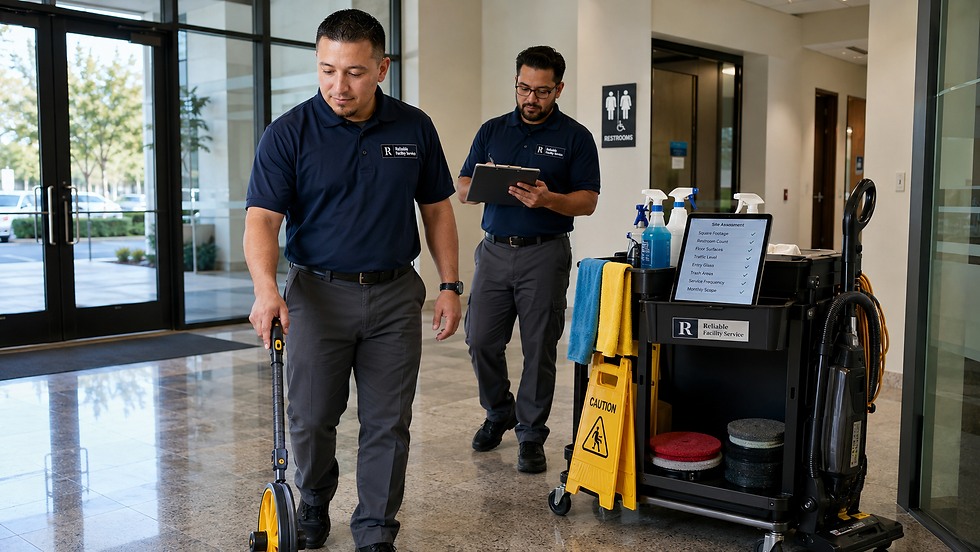
Professional janitorial service reduces these interruptions through scheduled cleaning, inspections, supply checks, and response procedures matched to the property.
A small office with light foot traffic might need routine service several times per week. A busy medical office, dealership, restaurant, or multi-tenant building often needs daily attention in restrooms, entries, common areas, and waste zones.
Restrooms and Breakrooms Carry More Weight Than Most Managers Expect
Employees use restrooms and breakrooms repeatedly throughout the day. Poor conditions in either space influence comfort, confidence, and workplace perception.
Restroom service should include fixtures, partitions, floors, dispensers, touchpoints, odor sources, supply levels, and recurring inspection. Fragrance alone does not solve odor. Professional crews remove the source and use chemistry suited to the material.
Breakrooms need the same discipline. Grease film, food residue, sticky floors, appliance touchpoints, trash, and sink buildup create persistent complaints when cleaning frequency falls behind occupancy.
Reliable service keeps these spaces usable without shifting responsibility to employees. The result is simple, fewer interruptions and fewer facility issues competing with normal work.
How Do Dust, Floors, Carpets, and Cleaning Chemicals Affect the Workplace?
Commercial janitorial work should remove soil instead of moving it from one surface to another. Vacuum selection, microfiber use, floor equipment, chemical dilution, and cleaning sequence all influence the result.
High-traffic carpet traps dry soil, pollen, fine dust, and tracked grit. Hard floors collect abrasive particles which scratch finishes and spread into adjacent areas. Entry mats help, but they need regular vacuuming and extraction to keep working as soil-control tools.
Cal/OSHA housekeeping rules require cleaning and sweeping methods which minimize contamination of the air. This supports controlled soil removal instead of aggressive dry sweeping in dusty occupied spaces.
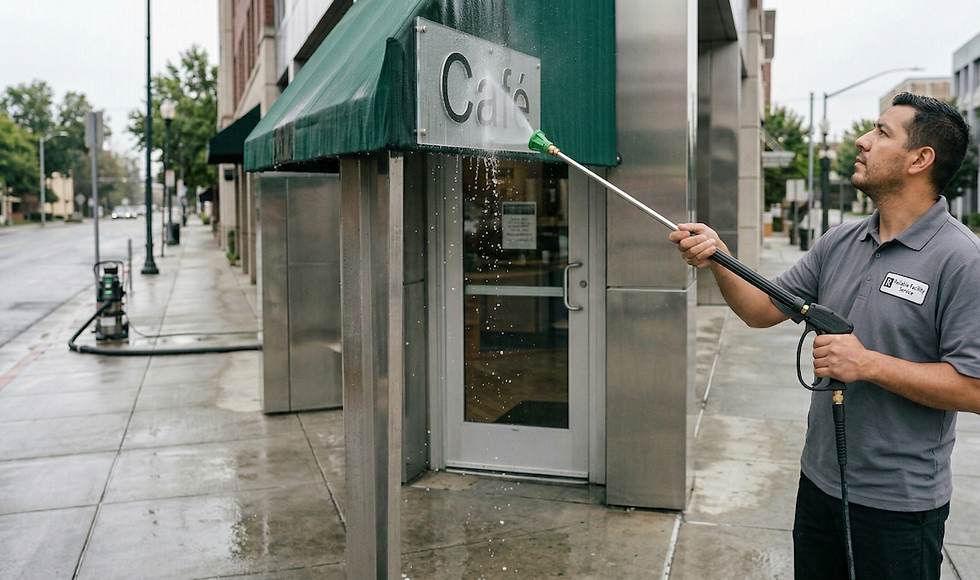
For exterior approaches, loading areas, greasy concrete, and heavily soiled walkways, high-heat power washing and related property services support cleaner transition zones before exterior grime reaches interior floors. Heat, pressure, detergent choice, dwell time, and surface type must match the substrate. Excessive pressure damages concrete, coatings, grout, and adjacent finishes.
More Chemical Is Not Better Cleaning
Professional cleaning depends on correct product selection and correct dilution. Stronger concentration does not automatically produce a better result.
The EPA notes cleaning products and disinfectants as possible indoor VOC sources. Crews should use products appropriate for the surface and task, follow label directions, avoid unnecessary residue, and account for ventilation in occupied areas.
Disinfection also requires correct procedure. Physical soil should be removed first where needed. An EPA-registered disinfectant must remain visibly wet for its label-specified contact time to deliver the listed performance. Spray-and-wipe routines performed too quickly often miss this requirement.
A trained crew understands the difference between cleaning, sanitizing, and disinfecting, especially in medical offices, restrooms, breakrooms, food-service areas, and shared touchpoints.
What Is the Difference Between Cleaning for Appearance and Cleaning for Performance?
Appearance-focused cleaning often stops after trash removal, a quick surface wipe, visible floor work, and fragrance. Performance-focused cleaning looks deeper. It tracks soil migration, recurring restroom problems, floor wear, high-touch areas, supply failures, inspection results, and complaints.
A shiny floor does not prove proper floor care. Residue, embedded soil, worn finish, or hard-water spotting still creates maintenance problems. Clean-smelling air does not prove odor sources were removed. A tidy breakroom does not prove grease film and touchpoints received proper attention.
The better question is not, "Did someone clean last night?" The better question is, "Does the facility stay consistently usable throughout normal operations?"
Cleaning Frequency Should Follow Facility Use
Cleaning schedules should reflect occupancy, traffic, surface type, operating hours, restroom demand, customer volume, floor material, and soil load.
A warehouse office near active loading docks faces different dust and grit exposure than an Orange County professional office. A restaurant faces grease buildup and food residue. A dealership deals with glass, customer-facing floors, restrooms, and vehicle-related soil. A medical office needs disciplined cleaning of common spaces and appropriate surface procedures.
Commercial carpet care changes with traffic. Low-moisture methods, hot-water extraction, spot treatment, and scheduled vacuuming serve different needs. Hard floors might require autoscrubbing, burnishing, neutral cleaning, or periodic restoration.
A strong contractor inspects results, documents recurring problems, and adjusts frequency before complaints become routine. You will find additional guidance in Reliable's commercial cleaning FAQ.
Why Southern California Properties Need Region-Specific Cleaning Plans
Murrieta, Temecula, Southwest Riverside County, the Inland Empire, and San Bernardino County often deal with dry soil, freeway particulate, warehouse dust, loading-area grime, construction residue, pollen, and seasonal wildfire ash. Coachella Valley properties add desert dust and heavier windblown soil. Entry control becomes critical because grit moves quickly from sidewalks and parking areas into lobbies, carpet, tile, and finished flooring.
North San Diego County introduces coastal moisture in some markets, plus pollen, exterior dirt, and customer traffic. Orange County offices, medical properties, retail centers, dealerships, and multi-tenant buildings often place greater emphasis on glass, polished entries, restroom consistency, and customer-facing presentation.
Review Reliable's broader Southern California service areas for regional coverage.
Exterior Soil Control Starts Before the Front Door
Interior cleaning becomes harder once outside soil spreads through the building.
Entry mats, routine vacuuming, periodic carpet extraction, hard-floor cleaning, glass maintenance, and exterior surface care all work together. Loading zones and restaurant service areas often need stronger grease and soil control. High-heat washing helps break down oily buildup on appropriate exterior surfaces while reducing dependence on extreme pressure.
Hard-water residue creates another Southern California problem. Mineral deposits build on glass, fixtures, tile, and exterior surfaces when water dries repeatedly. Proper removal depends on surface identification and compatible chemistry. Aggressive acids or abrasive methods damage glass, stone, metal, grout, and coatings when used carelessly.
Regional service knowledge matters because a cleaning plan for Palm Desert should not mirror a coastal North San Diego property or an Inland Empire warehouse.
What Should Employees Notice When a Janitorial Program Is Working?
The best janitorial program removes problems before employees need to report them.
Restrooms stay stocked. Trash stays below overflow level. Breakrooms remain usable. Floors do not feel gritty. Entry glass stays presentable. Dust does not build along ledges and corners. Odors are removed at the source instead of covered with perfume. Recurring complaints decline.
Employees should experience a facility which works without tracking the cleaning crew.
Property managers should also see consistency. Monday should not look strong while Thursday looks neglected. A reliable program includes clear scopes, scheduled frequencies, inspection, correction, and communication.
Reliable Facility Service supports commercial properties across multiple Southern California markets with janitorial and specialty cleaning programs matched to facility conditions.
When Should You Reevaluate Your Current Janitorial Service?
Recurring problems are the clearest signal.
Watch for empty dispensers, missed trash, dusty ledges, stained carpet, sticky breakroom floors, dirty entry glass, inconsistent restrooms, persistent odors, repeated employee complaints, and managers spending time correcting cleaning failures.
Review the schedule after occupancy changes. A growing office, expanded warehouse shift, new tenant mix, increased customer traffic, or longer operating hours changes cleaning demand.
Your provider should respond with a revised scope based on current use, not the same checklist from years earlier.
Conclusion

Professional janitorial service supports employee productivity by improving the physical conditions surrounding daily work. Cleaner restrooms, maintained floors, controlled dust, usable breakrooms, consistent waste removal, proper chemistry, and fewer recurring complaints reduce avoidable interruptions.
The goal is not to promise a fixed productivity percentage. The goal is to create a cleaner, safer, more dependable workplace where employees focus on their primary responsibilities instead of facility problems.
Reliable Facility Service works with commercial property managers, facility directors, HOA managers, medical offices, restaurants, warehouses, dealerships, retail centers, and multi-tenant properties across Southern California.
A strong service relationship also gives property managers a practical feedback loop. Site inspections, documented priorities, response to recurring complaints, and schedule changes based on traffic help keep the cleaning scope aligned with current operations. Reliable should be judged by consistency across the week, not by a single good-looking visit.
If your current cleaning program feels inconsistent, reactive, or out of step with building traffic, request a site evaluation. Contact Reliable Facility Service to review your current cleaning scope, problem areas, floor conditions, restroom demand, and service frequency.
Frequently Asked Questions
Does a clean workplace improve employee productivity?
A cleaner workplace supports conditions linked with concentration, comfort, workplace usability, and fewer facility-related interruptions. Productivity still depends on many factors outside janitorial service, so a fixed percentage promise is not credible.
How does workplace cleanliness affect employee performance?
Dust, odors, dirty restrooms, overflowing waste, sticky breakrooms, and neglected floors create distractions and extra work. Consistent janitorial service reduces these problems and keeps common areas ready for normal use.
Does poor office cleaning increase employee absenteeism?
Absenteeism has many causes, and cleaning alone does not determine attendance. Good cleaning supports workplace hygiene, restroom readiness, surface care, and environmental quality as part of a broader facility health strategy.
How often should a commercial office receive professional cleaning?
Frequency depends on occupancy, operating hours, restroom traffic, floor type, customer volume, food areas, and soil load. High-use facilities often need daily service in critical areas, while smaller low-traffic offices often need a lighter schedule.
Which workplace areas need the most frequent cleaning?
Restrooms, breakrooms, entrances, high-traffic floors, waste areas, and frequently touched shared surfaces usually need the closest attention. The right priority list depends on facility type, occupancy, and recurring soil patterns.